News 5/16/08

From The Alchemist: "Re: innovative care models. A new RWJ grant-funded site focuses on them. I wish them success and hope to see more models. Innovative HIT models could quell my progressive cynicism." Link. Example: the "12-Bed Hospital," where a RN serves as "clinical CEO" in a hospital unit. Here’s a progressive IT model that I’ve thought about: what if the IT department was stripped down to just infrastructure and technical services, with everything else residing in and managed by user departments? Should IT really be its own department when just about every aspect of it, including all the benefit realization, requires committed user resources and strategic alignment?

From Dave Stallworth: "Re: your own fan club. I started an HIStalk Fan Club group in LinkedIn." I never thought I’d have a fan club. I can’t wait to tell Mrs. HIStalk (I’ll leave out the "one member so far" part to make sure she’s suitably impressed). Just so Inga doesn’t pout, she’s part of the package, I assume. Thanks for doing it. I assume anyone interested can find it (I’m a LinkedIn noob, so I have no idea). Should we send dues?

From Nasty Parts: "Re: GE. GE is enforcing non-compete agreements. Of course, most companies out there nowadays make you sign one, but rarely are they enforced. Apparently GE has started sending letters to former employees."

From Ann Farrell: "Re: Microsoft. I sent them this: ‘While I appreciate Microsoft’s desire to be a visionary in healthcare IT, it would be great if they’d touch base with the Planet Earth now and then. The need, value, and practical application for printer-generated medications is something I can only assume the techies at MS dreamed up and prioritized to hype in some ‘visioning’ session. If they’d just make their core OS (Vista) stable enough for patient care environment and solve real problems - some present for decades through many iterations of ‘new technology’ - then you’ll get our attention."    

From The PACS Designer: "Re: cloud computing. TPD was surprised to find that Amazon sells web services through its Elastic Compute Cloud (EC2).  Also was surprised to find Red Hat is one of its partners, especially after the HIStalk interview with Dave Nesvisky. Anyway, surfing over to the Red Hat site highlighted a posting about cloud computing. Since it also covers the basics, thought it would be useful reading for HIStalkers." Links:  Red Hat, Amazon.

Listening: The Kooks, Brit power pop.

Some folks from Cottage Hospital will present a free May 28 webinar on teleradiology in critical access hospitals. Click Virtual Radiologic’s sponsor ad to your left to sign up.

Former Eclipsys VP John Adams is named COO/EVP of a marketing company.

St. Barnabas (NY) goes with Eclipsys for ED, pharmacy, and KBA.

Proventys, which sells software that tailors chemotherapy doses using EMR information, raises $5.65 million in VC money, hires a CEO, and announces that McKesson will use its technologies.

McKesson CEO John Hammergren endorses a healthcare reform plan under the Healthcare Leadership Council banner. Who’s in that group: giant companies making big money off the GDP-sucking system we have now (drug companies, big hospital systems that don’t pay taxes, purchasing groups, and supply companies.) The "reform" seems mostly to get Uncle Sam to pay for more insurance to keep the gravy train rolling along. I assume (but don’t know for sure) that it’s the same group listed here as shuttling members of Congress all over the place for "fact-finding" and spending millions (warning: PDF) on lobbyists. Other startlingly fresh ideas from the group: everybody should buy more IT and the government should reduce manufacturer liability. HLC linked up with other organizations to form a "Confidentiality Coalition" that, despite the name, tried to weaken it by petitioning HHS to drop the accounting of disclosures provision of HIPAA, declaring it "extremely burdensome and costly" (apparently it’s too much trouble to track who’s snooping around medical records, even using that fancy technology that everybody needs more of to save healthcare).

Celebrity-fawning politicians call on Dennis Quaid to educate them about medication errors. More specifically, his interest in getting around federal restrictions on suing drug companies at the state level over FDA-approved products. He believes the heparin label his twins’ nurse didn’t bother to read wasn’t big enough, so Baxter needs to write him a check (not the nurse or hospital). Guess even his millions won’t win him an HLC invitation after that.

The big headline says nurses "acknowledge" fatigue leading to mistakes in a "new study," but it should have been past tense: the just-released study came from a survey of 2004 incidents. Does it really take four years to tabulate a survey and write it up?

Microsoft bought a hospital system from Thailand, so now they need engineers to work on it. Interesting comments about HealthVault: "… while attitudes to sharing information varied, although in the US he said he believed that Microsoft had overcome resistance to sharing health information. The real question was the business model, and who would pay for the service?"

Pharmacy automation vendor Talyst gets $20 million in financing commitments. The CEO just left, leading to speculation that his resignation was a condition of getting the money. Surely Cardinal Health would like to buy them at some point.

More complaints about the New Zealand surgery system that’s being reviewed after patient safety complaints. A sore point: IT people are running the system instead of real users. "She claims patients are now being prepped for the wrong procedures. One was allegedly told by IT staff without a doctor’s say so to stop taking medication. Another needing a knee operation was given a letter for a dental procedure." I’ve known plenty of nurses and other clinicians who’ve been out of patient care for 10 years or more who still insist on providing medical advice and services from the IT department, with varying levels of quality, so I’m not entirely shocked.

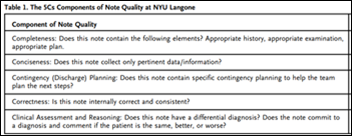
Two BIDMC doctors, a husband-and-wife, warn that EMRs often contain meaningless cut-and-pasted and templated text instead of anything insightful and focused, leading physicians to skimp on diagnosis and history-taking.

I keep hearing that TEPR is on its last legs, so maybe this is the confirmation. A vendor doctor will give five different presentations there. I noticed that HIMSS, too, loaded up its agenda with vendor people last time, often as co-presenters, but sometimes speaking alone (which was highly unusual a few years back). I’m sure they know their stuff, but I skip those sessions every time since I don’t want to spend the whole time watching for bias, avoidable or otherwise.

A West Virginia doctor who won several awards and started an EMR company gets canned from his job as medical director of a community health center.

A controversy in Saudi Arabia, as pictures of a hospital’s celebration are posted online that appear to show "gender mixing." An inquiry found that males and females were seated together in the same hall, which is illegal, but the hospital director was let off with a warning instead of being removed as had been threatened.

Jobs: Quality Assurance Engineer (GA), Wireless Networking Consultant (PA), Revenue Cycle Consultant (FL).

Odd lawsuit: a patient being treated in the ED after an on-the-job accident alerts doctors of his HIV status. He claims he overheard one of them tell his boss, which the doctor denied at first, but  later admitted, saying she mistook his boss for a neurologist. The man claims he was left with crippling anxiety, which got him fired after a seven-month work absence. He’s suing the hospital, but not the former employer.

Odder: a 25-year-old female student gets off with probation after nearly killing her boyfriend during drunken sex. He asked her to carve a heart-shaped symbol onto his chest since they were regular practitioners of "body modification," but she pushed the knife too deep, piercing his heart. He lived, leaving the happy couple free to reproduce.

E-mail me.

Inga’s Update

Cerner is one of 52 employers nationally to receive the Best Employers for Healthy Lifestyles award from the National Business Group on Health. With its on-site healthcare clinic, fitness center, and various wellness and conditioning programs, Cerner appears quite committed to promoting healthy lifestyles (no pizza jokes, please).

Another workplace focused on improving employee health is Opus Healthcare. I hear that 20-odd participants have collectively lost almost 800 pounds on a company-wide weight-loss initiative.

The 32-provider Clopton Clinic (AR) replaces a legacy EMR/PM for Allscripts’ products. Happy conversion!

Exempla Lutheran Medical Center and St. Joseph Hospital go live on Picis ED PulseCheck.

If you are interested in learning more about your prescription drugs, check out the latest service from HealthGrades. You can find out what meds are most prescribed within a particular class and what drugs are in and out of fashion. I actually was curious to check out my various psychotherapeutic drugs, but it looks like it is not quite operational.

Emageon loses $4.6 million ($0.21 a share) in the last quarter. This compares to a $1.8 million loss the same period last year. Revenue was also down almost 30% from the previous year. The CEO blames market conditions.

Grady Health System is installing MedAssets’ supply chain management solutions.

The San Antonio Metropolitan Health District is partnering with Vermedx for a diabetic intervention pilot program that will create a city-wide registry and map patient conditions. The project involves at least 50,000 diabetic patients

Using a computer can help drug abusers abstain longer, according to a Yale study. Those receiving computer-assisted cognitive behavioral therapy training plus traditional counseling had significantly fewer positive drug tests than those receiving counseling alone.

Eclipsys names John T. Casey and Craig Macnab to its board. Casey is chairman of Medcath and Macnab’s CEO for National Retail Properties and a former Per-Se board member.

HHS’ Office for Civil Rights has produced a pretty chart detailing enforcement results from April 14, 2003 through the end of 2007. Of the 32,594 complaints over the years, only two resulted in criminal convictions.

clip_image002

E-mail Inga.

McKesson Acquires Vivalog LLC

McKesson announced this afternoon that it has acquired Vivalog Technologies, a Seattle-based provider of Web-based knowledge management applications for imaging that includes the MyPACS.net reference site for case sharing. That site is visited by 70,000 imaging professionals monthly, according to the announcement.

From the press release: "With the addition of these solutions, McKesson’s information technology-based enterprise imaging offering continues to lead the industry in enabling healthcare facilities to provide better, safer care. McKesson’s enterprise imaging solutions offer unprecedented data sharing, connecting the entire care team and speeding the diagnostic process – from ordering a procedure to distributing reports and diagnoses. McKesson intends to continue to leverage the excellent standards-based connectivity of the Vivalog product set in order to allow the widest possible benefit to healthcare institutions."

News 5/14/08

From IsItTrue: "Re: Hersher. It appears Betsy Hersher is selling off to Furst Group. A look at the Hersher website shows very few searches and virtually no staff." I e-mailed for confirmation, but got no reply. You are right - they have only four IT executive position listings and the home page says, "We are actively moving into career coaching and organizational coaching and consulting."

From Mick Ronson: "Re: QuadraMed. Look out for news from one of their biggest clients that will affect the future of QCPR."

From Doc Image: "Re: 1500s. To help Samantha Sang brainstorm ways to fax 1500s, I would suggest looking at fax server software. I work for a document imaging company, and while I have
never seen an organization go from EMR to fax server, I know many of our customers will configure a third party fax server as a printer, and then ‘print’ documents stored by our software to fax. I would assume that you could do the same with an EMR or billing system, but you know what they say about assumptions …"

From Deloitte’s Tush: "Re: CCS Summit. I saw a story about a panel on secondary use (or ‘reuse’) of healthcare information from this conference. Reading the agenda, it looks like a good one. I was wondering if the HISTalk community has any experience with / reviews of it?" Link. Sometime I’ve got to get out of my routine and actually attend conferences, although it’s tough to get time off from work. I only go to HIMSS, so I miss stuff (including some cool blogging opportunities).

From Alyssa: "Re: your marital status. It doesn’t bother me - let’s get together." Thanks for the thought and the pic (nice), but I’m pretty sure Mrs. HIStalk wouldn’t be up for it.

From Cesar Geronimo: "Re: Labcorp. They are likely to buy the outreach labs from Stanford and Carilion."

From Hannah: "Re: TeraMedica. I’m new to the site from Australia and looking for assistance. Anyone used Evercore?"

For those who left pithy comments on their LinkedIn contact requests, I just now realized that I could have replied (I should have read the manual). No slight intended. Anyway, here’s a fun one left just now: "I’ve begun to read HIStalk religiously (or at least a couple times a week) since I figured out that you guys knew things I didn’t know about the company I work for, weeks before I knew it. The wisdom of the crowds indeed. Me love you long time."

Misys shares continue to rise on more speculation that competitors (banking software, not healthcare, of course) will make a play for them. The company seems anxious to get its Allscripts merger done, but an acquisition or even the possibility of one could complicate it. If Misys were to be acquired, you would have to expect the healthcare division (merged or not) to go on the block since it’s not their core business (for Misys either, but that’s another story).

Listening: The Last Shadow Puppets, new, 60’s-sounding Brit pop, like Gerry and the Pacemakers with an orchestra. Cheery. Like it lots.

Philips keeps finding monitoring companies to buy, this time one in Brazil. Philips announces it will acquire Dixtal Biomedica e Tecnologia, which makes hospital monitoring equipment.

Healthcare IT Transition Group releases a report about implementation of the National Provider Identifier. Marty summarizes: "Things look bad, of course, as they always do for nationwide HIT implementation. But this time we’ve got worse news — adding more time to the project is probably the worst thing we could do (though it is the most predictable course of action by CMS)." He’s offering a BOSO - buy one and they’ll send one free to a trading partner of your choice.

Eclipsys opens an office in Pune, India, its second in that country.

Jobs: Revenue Cycle Consultant (FL), Eclipsys Clinical Consultants (national), Technical Healthcare Consultant (CO).

OSF Homecare (IL) buys McKesson Horizon Homecare.

HP will acquire Electronic Data Systems (started by Ross Perot in 1962) for $13.2 billion in cash, apparently fulfilling a desire to get into the data center and custom software development business as an IBM competitor. Bad news if you work for EDS since HP says it will lay off bunches of people to try to make the deal work, adding on to the 15,000 HP already ditched since HP’s CEO came on board to replace Carly Fiorina in 2005.

Unions and other groups rally against New Jersey’s proposed healthcare program cuts. Everybody’s concerned (mostly about their own self-interest) but nobody seems to want to pay in the form of personally lower wages or higher taxes. In other words, they’re in favor of somebody else picking up the tab, which describes healthcare in a nutshell.

A New Zealand hospital will be investigated after the head of anesthesia complains its new surgery system is unsafe.

A Microsoft guy says printers could be like mini-pharmacies, mixing custom drugs from their cartridges.

Unrelated: is there a razor blade cartel? A pack of razor blades costs more than an MP3 player, is now stored under lock and key in the grocery store, and the last ones I got were in one of those plastic clamshells that require scissors to crack into. Surely they cost a tiny fraction of their price to manufacture, so why doesn’t someone undercut? I’m thinking about finding an overseas supplier and selling them over the web.

A Libertarian group doesn’t think much of Hillary Clinton and EMRs, apparently: "Clinton plans to pay for the remaining $50 billion by eliminating waste and inefficiency. Her ideas include all the latest fads–electronic medical records systems (designed in Washington, DC of course), pay-for-performance (bureaucrats telling doctors how to practice medicine), and evidence-based medicine (more bureaucrats telling doctors how to practice medicine). Have ideas like these saved money anywhere before? Not that anyone can verify."

A Med Flight helicopter crash kills a surgeon, nurse, and pilot from the University of Wisconsin Hospital. The 37-year-old doctor leaves his ED physician wife and toddlers aged 3 and 5. Sad.

Emageon’s Q1 numbers: revenue down 30%, EPS -$0.21 vs. -$0.09. Imaging business is sucko, obviously.

Stuff you can do here: use the Google box to your right to search through HIStalk going back to 2003 (has it been that long?) Drop your name in either or both signup boxes for e-mail updates or the Brev+IT newsletter. You can send me new or rumors anonymously, of course. Make some sponsors happy and click the ads to your left to see what cool stuff they’re doing. And lastly, pat yourself on the back for reading HIStalk - Inga and I appreciate it a lot. We love you long time.

E-mail me.

Inga’s Update

When Mr. H indicated that he and I needed additional LinkedIn contacts for self-validation, what he really meant was he was tired of always having to come up with creative ways to praise me since I am so neurotic and insecure. So, he figured that if I had more contacts, I would feel more loved. Well, let me tell you, the love is now flowing! I’m not sure how many new contacts I’ve gotten in the last week, but it seems like perhaps 30. I am now connected to 70 people!! I was feeling pretty heady and perhaps even validated until I happened to notice that Mr. H now has 87 connections. Fortunately LinkedIn has this cool feature that lets you see what connections another person has that you don’t so, at least I now know who is snubbing me. (Big sigh … life as the undercard).

Sage Healthcare is a new reseller of the NCR MediKiosk product. The MediKiosk and Intergy EHR will be integrated later this year to allow patients to complete their own office visit check-ins and demographic updates, as well as electronically sign consent forms.

Tawam Hospital in UAE has successfully implemented multiple Cerner Millennium solutions, with more hospitals and clinics to follow over the next year.

The Wisconsin Pharmacy Quality Collaborative launches its Pharmacy Quality Collaborative and is using McKesson’s newly developed Medication Therapy Management (MTM) software to connect pharmacies, physicians, and payors.

CHIME names Sharon F. Canner as director of advocacy programs to lead CHIME’s government affairs activities. She comes from HIMSS, where she was director for corporate relations and the EHR Vendors Association. I noticed in a certain publication that she “declined to provide her age.” I personally wouldn’t have considered her age if I hadn’t read that, but now I am left wondering if she is really, really young or really, really old. Would a man ever decline to give his age?

The Chicago Tribune runs an interesting article that looks at the struggles of for-profit hospitals in the Chicago market in light of the recent announcement that MSMC Investors and Transition Healthcare are planning to purchase St. Francis Hospital.

CDW Healthcare announces it is collaborating with Beth Israel Deaconess Medical to provide more than 300 affiliated physician practices access to the hospital’s EHR/PM software.

Memorial Hermann Healthcare System is partnering with AirStrip Technologies to provide OBs with real-time waveform data from L&Ds onto PDAs and Smartphones. I am all for technology, but if I were in labor I am pretty sure I would just as soon have a nurse call the doctor to say, “Get over here now!”

Completed: the first data exchange between LSU Health Science Center and Delhi Hospital. Using Dairyland Healthcare technology, the exchange is a milestone in a state-wide Louisiana Rural Hospital Coalition project to provide EHR and telemedicine services to rural communities.

Dr. Deb Peel dropped us a note saying that 25 members of the Coalition for Patient Privacy are urging Congress not to pass e-Rx unless the data mining and sale of Americans’ prescriptions to insurers and employers is stopped. “Prescriptions should be used for the single purpose of obtaining medicines — nothing else without informed consent.” Dr. Peel indicates the current legislation is hidden into another “must-pass” bill. She’s supposed to be on Dan Rather’s show tonight.

Ardent Health Services selects Surgical Information Systems’ perioperative system for its 10 hospitals across New Mexico and Oklahoma.

IPA Monarch Healthcare in California chooses NextGen’s PM/EMR suite for its 2,200 independent physicians across Orange County.

The LA Times reports that 14 more UCLA Medical Center staffers have been implicated for snooping, including four physicians. I wonder if the physicians will get any more than a hand slap this time.

Finally, I was very distressed to read that, in addition to having to pay ever-increasing amounts to fill up my car, the price of shoes is anticipated to rise 10-15% over the next year. What’s next – chocolate?

E-mail Inga.

HIStalk Interviews Dave Nesvisky, VP, Red Hat Healthcare

The Red Hat folks e-mailed right before HIMSS, saying they are big HIStalk fans and asking to run a "Mr. HIStalk Shoe Shine Booth" from their booth. Darned if they didn’t, too, with real professionals buffing and polishing the shoes of attendees who sat high up in an old-fashioned chair right there in their booth. I didn’t know much about the company, so an interview seemed like a good idea. I talked to VP Dave Nesvisky, who’s been in healthcare IT for many years.

Tell me a little bit about you and what you do.

I’m fairly recent with Red Hat. I was brought on in September of ’07. The intent was to have my past experiences brought to bear Red Hat to lead a vertical team. To be able to go deeper into lines of businesses is to actually have people that understand those businesses. I’ve been in healthcare IT, sales, and sales management for about the past eleven years. Prior to that, I was working in the public sector sales and sales management for fifteen years. 

I’m an old dog. I’ve been around 25 years in technology. I always joke with the young bucks in inside sales about selling 200 meg disk drives for $10,000 and mini-computers with a meg of RAM the size of a washer-dryer. They look at me like I’m talking about propeller aircraft and buggies and stuff like that. 

Now I’m in infrastructure. I’ve been in databases and middleware applications. So I’ve seen quite a few things; had some good experiences and some good relationships. I thought I could help out Red Hat and they obviously thought the same thing.

Summarize the offerings are that are available for healthcare.

Most people, when they think of Red Hat, they think of Linux. Actually, we have a tremendous range of offerings for healthcare.

Our MetaMatrix technology can extract data from clinical systems to provide a single, real-time view of patient data. This is a horizontal product designed to federate disparate data models. Whether the data is stored in flat files, relational models, other types of data stores, the data models can be pulled to this central point in MetaMatrix and you can create new data models using the existing data models. You can synthesize data and repurpose it for new applications.

We think the opportunity in healthcare in unbelievable when you think about all these disparate applications, all these ancillary systems and so forth; and the opportunity to pull these things together to give more complete and comprehensive information at the point of care. It has tremendous opportunity affecting patient safety and accuracy. What’s interesting about it is it is not a data warehouse, so it’s not storing the information in the second place. You don’t have the synchronization of data issues between the  source system and the second source. It really literally creates a virtual database and presents it to an application, but you can cache the information. If one of your source systems drops out for some reason, you have a contingency plan to get to it.

MetaMatrix is the crown jewel in our SOA platform, which also includes all the JBoss components, pieces of middleware, rules, web servers, portal development, and things like that. Dropping down below that is Red Hat Enterprise Linux, which has a lot of capabilities: virtualization, I-O management, and clustering, and also IPA, which is security to help with control and auditing for who has access to what systems and so forth. We’ve also added a  high performance messaging component that was co-developed with a lot of partners called AMQP, which is a high performance messaging standard which can be easily adapted to handle HL7 messages. It’s a big stack.

So how do you go about selling this to a hospital?

Obviously the dynamic of healthcare is most of the applications that are run by IDNs and hospitals are purchased ISV applications. There are hundreds and hundreds of vendors that provide the technology to healthcare, so a lot of our focus is around working with ISV partners. You’ve probably read about the things we’ve been doing with McKesson, GE, CPSI, and Sentillion. There are literally dozens of companies that are adopting our technology to their work.

When you start talking about MetaMatrix, it gets interesting. It represents a tremendous opportunity for ISVs to take advantage of the technology and pre-integrate some of their products and repurpose some of their existing applications to offer their customers this new, synthesized clinical view. It’s also an opportunity for health systems themselves to take MetaMatrix and, if they have a robust enough IT staff, to take advantage of this technology on their own.

Most of what I’ve heard about Red Hat in healthcare has been because of McKesson. What’s the scope of that relationship and how interested is the McKesson client base in using Red Hat products?

McKesson has adopted what we’re referring to as the Red Hat Enterprise Healthcare platform, which is Red Hat Enterprise, Linux, the JBoss SOA middleware, and the Red Hat Network Management. So it’s the complete stack of Red Hat open source infrastructure. It’s now the standard platform for McKesson Horizon Clinicals solution suite and certified for all scales of their delivery. So, it’s not just for small hospitals — it’s certified for use up and down the line for them.

What are the benefits to McKesson customers?

They probably used some proprietary Unix boxes by the vendors that you typically see. There’s a tremendous cost advantage moving to Red Hat Enterprise, Linux, and JBoss in a suite like this. If you think about it, all these capabilities that we’ve packed in — it’s all open source software. There isn’t a license fee associated with any of the software.

We charge an annual subscription that covers maintenance and updates, much like other software vendors charge annual support. The difference is proprietary vendors charge an upfront license fee, so it’s a big capital expense.

Our software is designed to run on commodity X86 and AMD hardware, so you can shop for the most bang for the buck from a hardware perspective. Because all of our various components are integrated, like the virtualization and the clustering and so forth, we can offer a one-stop shop for training to get administrators and other users trained on the system at one place, at one time, whereas they would have to have hopefully one person, sometimes multiple people, being sent to different training classes by different vendors for all these different components.

On top of that, because of the possibilities in virtualization, they can cut down on their server count tremendously. The cost of the servers goes down because you use fewer of them. People are thinking green these days. It decreases power consumption; it decreases cooling requirements; it decreases requirements around floor space.

You’re getting a tremendous capital expense advantage moving to Red Hat because you’re not having to spend as much on the hardware and the infrastructure software. You’re gaining even more over time in operating expense savings because of training and because of all the power, cooling, and space requirements that you’ve reduced.

The beauty of it is that people aren’t sacrificing anything in the way of reliability and security. In fact, most of the articles that have come out, and most of the studies that have been done, have shown that, from the security perspective, open source software is usually more secure than proprietary software The reason is everybody can see the code bugs; they’re detected early; they’re fixed early; the ramp time between a problem and vulnerability being detected and being closed out in open source is dramatically faster than a proprietary system. And from a reliability perspective, people are consistently impressed with the uptime they are getting with the systems.

There was a study done by Florida Hospital. You can see they’ve had tremendous experience with the reliability of Linux. They are drawn in by the cost savings, but gained high reliability and availability.

What about relationships with other vendors?

We have a number of Epic shared clients. We have a very good relationship with InterSystems. We frequently do information sharing and joint engineering work with InterSystems to optimize Cache’ on a Red Hat platform. We have a number of clients that are running Epic in their shops on top of a Red Hat platform very successfully.

We talked about McKesson, but GE PACS has actually been on Red Hat even longer. In fact, if you look at a survey of the PACS vendors out there, most of them run or at least offer the ability to run Red Hat Enterprise Linux.

Has anyone run the numbers to know how much money clients are saving?

Some of the numbers are staggering. I’m almost reticent to talk about them because they almost seem ridiculous, but I think we can very comfortably say people will have life-cycle savings in the order of anywhere from 35-40% upwards of 50% on infrastructure by going to a Red Hat platform over a proprietary platform. I think that’s a very comfortable number.

I see 40% time and time again. That’s a lot of money. The beauty of it is that it’s good for everybody. Obviously it’s good for Red Hat because they are using our technology, but it’s great for the client because if they’ve budgeted 40% more, lets say, that 40% can certainly be applied to other projects. It returns an investment pool of the client that they can then use on projects that they want to use it on.

It’s great for the ISV, Independent Software Vendor, because a lot of times they are trying to fit into a budget. By offering an infrastructure that costs that much less, rather than them having to discount their software aggressively to meet the budget of the client, they can roll in with an infrastructure that’s every bit as secure and reliable as what they had before. They can discount, not their product that they make their money on, but something that’s basically just a cost item for them. You know, the hardware and infrastructure. And if in fact it’s returning an investment pool to the client, that vendor actually has a better opportunity to sell them maybe an additional application or two with their investment. So it works out to everybody’s advantage.

Hospitals have always been capital-constrained, so if you can move costs into the operational bucket, that should be popular.

That’s the big thing. It’s an operating expensive because it’s an annual subscription for support of the software.

Is the retirement of the DEC/HP Alpha, which was big in healthcare, going to provide opportunities?

Yes. That’s a great opportunity for us. Those were tried and true, very reliable hardware, but it’s cycling out. That’s where our opportunity come up. They lease their hardware and when their leases are up, they look at, "OK, what’s the latest and greatest? What’s faster and cheaper?" And where they are making that look, we have a great at opportunity to introduce them to what we’re doing and save them shocking amounts of money.
It is sometimes a chicken-and-egg sort of thing with a lot of the vendors because the client isn’t looking for Red Hat because their vendor doesn’t support it yet. On the flip side, the vendor isn’t interested in adding another platform because their customers aren’t asking for it. So we’re working on bringing both sides together. 

A lot of our job right now is in education and explaining to people. Because they’ve come out of a very reliable environment with the Alphas and the HPs and so forth, they can’t afford to sacrifice reliability and security, so a lot of our job is explaining about open source and about Red Hat and giving them some proof points about reliability to get everybody comfortable with it.

How much technical training is needed?

It’s a very straightforward transition from Unix to Linux for the ISV applications. They make their migration in a very straightforward way.

Red Hat was #1 in value among CIOs in a recent survey, even beating Google. How do you use that to get people’s attention?

That’s exactly one of the points. Folks in healthcare want to know that it’s been done before. You talk about mission-critical applications; healthcare is the most mission-critical app. Hospitals don’t close. Things happen around the clock. They can’t afford to take a risk and I absolutely respect that. Demonstrating value and reliability that’s proven in other industries and within healthcare is really important. Having that CIO survey show that, four years running, we’re the most valued technology company, that says a lot. That resonates with them. They respect that.

Beth Israel Deaconess has gone with Red Hat. What’s their experience been?

Things are going every well for them. Dr. Halamka is a pretty vocal advocate of Red Hat Enterprise Linux. He’s got a great quote about finding an operating system without the virus of the month, without patches, without downtime created because of so much feature creep, and so forth. He was able to find that answer in Red Hat Enterprise Linux. He comes right out and says he’s getting the security, reliability, and cost reduction that he’s looking for. He’s going to be a speaker at an upcoming user conference that we’re having June 18-20 in Boston.

If a reader is interested in learning more about Red Hat, would the conference be appropriate, or is it geared to existing users?

I think it’s definitely a place for folks who are just starting to dip their toes into using open source in their environment. It’s definitely the place where you want to start. It’s where you can get all the information you need to have that happen and to really get some basic information abut open source, showing the reliability, showing that it’s a proven technology and not as risky as you might think.

It’s a good fit for both the business representative of a healthcare system as well as a technical person. Clearly a technical person would love it because they get exposure to some cutting edge technologies. We always trot out some new things there for people to look at. From the business side, it gives people the opportunity to ask the hard questions about, "How are you really using this?"

I always get a lot of questions about what’s going on in financial services because they have such high throughput and large-scale systems. We always have people representing these other industries that you can talk and share thoughts with.

What’s you sense about open source healthcare applications?

People are running open source and don’t even realize it, like Apache or Tomcat. They’re in everything. People are using open source all the time never thinking about it. It’s very reliable. Then when we raise the visibility of it up and say, "OK, these systems are going to run on Red Hat Linux" and they run them for awhile and they run great. All of a sudden, that opens the door to say, "We’ve had challenges with interoperability and other things. What else is out there?" 

They’re willing to take a look at projects like WorldVistA. Open Health Tools is doing some great stuff. I would like to think that Red Hat has a position of thought leadership in open source; that our opinion is valued in the community. When we go out and tell folks, "It’s ready for prime time," we can help guide people and take advantage of their open source applications.

You mentioned the SOA in healthcare. Everybody talks about it. Do you think that’s going to make a significant difference?

Yes. If you asked ten people, "What is SOA?" you’d get ten definitions, anything from web services all the way up to full-blown architecture. 

Every system in healthcare has some common elements that repeat from system to system. Whether it’s the core clinicals or what have you, there are always some components of it that repeat. The ability to take those repeating components or services and build new systems using them makes common sense.

The software we use is not a new concept. Its been around a long time. The difference now is, when you can take advantage of open source tools and look at the source code, you’ve got much better visibility into what you’ve actually built and the ability to share it. Before, people would build software, but it would be proprietary and enclosed. To be able to reuse that package, you had to guess what was in there.

With open source, you can look at it and understand exactly what it is, how you can repurpose it, and what pieces you need to change to take advantage of it. It gets you a huge head start on building new applications. It’s a terrific opportunity. Open source and open standards make the timing right for SOA to be a legitimate strategy for healthcare IT.

Most open source organizations don’t have the resources that Red Hat has to get that message out. Do you feel that Red Hat should advocate for them?

We do, because we believe in the open source model. There’s opportunities for the typical core ISVs that you see out there to take advantage of bits and pieces and embed it in their own applications. Just in the same way that McKesson is taking advantage of our technologies to build their applications.

I can foresee where some of these open source projects will move up the stack and take advantage of some of those components as they build the next generation of their product. I’m not speaking from absolute knowledge about McKesson’s strategy is, but in general, I see ISVs certainly taking a look at what’s out there. If it can accelerate their development cycle and allow them to deliver more software more economically, of course they’re going to do it.

The whole idea about open source is you’ve got lots and lots of contributors. You’ve got more people pouring their work into code than any individual company could possibly hire. You could big the biggest software company in the world and they don’t have as many developers as the open source world does. The whole idea is for large communities to come together and take  advantage of what’s been built.

How would you say the culture is different at Red Hat from the healthcare vendors you’ve worked for?

One thing that’s pretty funny. We have an internal e-mail address called Memo List. Basically it’s just freeform. In any other company, there’s such a tight control around sending e-mails, their legal this and that. This memo list — people are asking questions about recipes and where to travel. It’s like a freeform forum inside the company that goes on.

There’s a tremendous amount of commitment and passion around open source. This place — you eat it, breathe it, sleep it. That’s everything here — the community involvement. Open source -– very, very passionate about it. In fact, we run all open source products internally. Stupid me, I had a Mobile 5 phone. I came in here and I said, "Can I get push e-mail for this?" They looked at it like it was some kind of Satan or something. They wouldn’t support that Microsoft phone. They were going to perform an exorcism on it, I think.

There’s just this unbelievable, single-minded purpose around advocating open source. So when you get back to your question about other open source projects and open source products out there, I’m just speaking from my perception of the company, we feel this obligation to help anybody that believes in open source to help them be successful. Red Hat has got 80% of the paid Linux market. With that kind of market share and brand visibility, we think we can help these companies become influential.

How many employees does Red Hat have?

I think we have about 2,500.

As far as healthcare then, what’s your structure going to look like to operationalize this vertical market strategy?

I’m working hard to hand select sales reps that have been in healthcare. That’s always the first question when you go into sell something in healthcare: "How long have you been in healthcare?" and "What do you know about healthcare?" Customers play stump-the-band with you to make sure you’re legit, because I guess they’ve seen companies come in and out of healthcare before. They want to make sure you’re serious.

I’ve selected some people for the team that have deep roots in selling in healthcare. They’ve been in the business north of 20 years in healthcare IT. They know what they’re doing.

On the product management side, we’ve got a mix of folks. Some folks that have deep healthcare subject matter expertise and other folks that obviously have deep Linux and middleware and product-specific expertise. We’re cross-training each other. We’re trying to build both strength and knowledge in healthcare inside the company, and at the same time, cross-training these healthcare veterans with a depth of understanding of open source and the Red Hat product line so we can hopefully present the  best of both worlds to our clients.
Our solution architects, which are our technical folks, are typically doing the deep dives on technology with the clients. Explaining it, demonstrating it, and so forth. They all understand the technology very well. We’ve been spending a lot of time working with them; talking to them about healthcare and the unique requirements in healthcare IT; getting them in front of a lot of prospects and customers; letting them do a lot of listening to be able to a more relevant technology recommendation to them. The more they understand about healthcare, the better off they’re going to be and the better off everybody’s going to be.

Is there anything else that we should talk about or that you would like to mention?

I gave you the shout out that we’re HIStalk fans over here.

I appreciate that.

Hopefully you got a shoe shine at HIMSS?

I just had to walk by and talk it all in. It was kind of strange to see even my phony name up on a shoe shine stand.

Our Fake Inga was equally popular. People liked taking that five-minute break and getting a shine. It was great.

Anything else?

We’re delighted by the enthusiasm we’re receiving in healthcare. Frankly, the reason that pulled me into Red Hat is it just seemed like an absolute perfect fit. Here you’ve got this very reliable and secure and scalable environment that you can offer to an industry that’s always so cost-constrained at such a much more reasonable cost than what they’ve been used to paying. It just seemed like natural fit. And now, as we work with these ISVs, there’s obviously advantages to the as well.

The other thing that we didn’t really talk about, but that we’re very involved in, is working with standard bodies and groups that are working towards things. We are lending a point of view to that and encouraging those projects as well.

Monday Morning Update 5/12/08

From Irwin M. Fletcher: "Re: degrees. Inga hit the nail on the head: if you could get HONEST responses from people, those with advanced degrees would say it was required (self-validating) and those without degrees would say the school of hard knocks is the best alma mater. An advanced degree isn’t as much about what you learn, but the personal and/or professional commitment you are demonstrating."

From Befuddled: "Re: Secretary Leavitt. Interesting that he is finally getting it and  looking beyond EMR industry rhetoric. ‘I think it’s important to remember that the goal here isn’t [EHRs]. The goal is to transform the sector of health care into a system of health care, a system that provides consumers with information about the quality and cost of their care." Link. I take it as more of an endorsement of EMRs, but as a tool toward an end that doesn’t stop with checking off the "we’ve implemented one" box. His closing comment says so: "Health information technology is an enabler of better quality, lower costs, fewer mistakes and more convenience … The goal is the value that the records produce, not just the existence of the records."

From Concerned Customer: "
Re: Merge Healthcare. Any news or rumors as to what will happen? They are our PACS vendor and things are not looking too rosy." The company’s market cap is less than $12 million, its auditors expressed doubt last month that it can continue without a cash influx, the low share price triggered a Nasdaq de-listing notice, and management has said they will consider "all strategic options" as they try to stop the bleeding with layoffs. A new report says that cash is down to $8.5 million on March 31 and the company has no credit to finance what it said was its only hope, a new teleradiology business. Also in Friday’s report is a statement that the company may be forced into bankruptcy on June 30 (headlines like those don’t exactly enthuse prospects). Shares dropped another 10% to $0.35 Friday. I would expect you’ll see worse support and development because of the job cuts, which nearly always drive off the best workers who have other options. Then, it’s wait and see as to whether they’ll limp into bankruptcy (which could last years), sell out to another vendor or to private equity, or start a long recovery. I’d like to say something reassuring, but these particular tea leaves are ugly. If you’re already a customer, though, I’d sit tight since you don’t have a lot of options anyway.

From Luvvin It: "Re: maybe it won’t be Allscripts-Misys. From the Telegraph: Software group Misys firmed 9¼ to 174¼p amid rumours of a possible bid in the range of 210p-220p per share."

From Samantha Sang:
"Re: 1500s. Has anyone heard of  any medical billing services or EMR/billing software able to fax all of the their 1500s? Seems like a cool and obvious idea, but I’d never thought of it until recently."

From Blogreader:
"Re: advance degree. See this post." Link. Scot Silverstein doesn’t usually have good things to say about CIOs and IT departments, so if you don’t want to start your Monday morning sputtering and flinging your coffee at your monitor, don’t click the link. He often makes harsh observations from the context of "the IT people didn’t hire me, so they must be insular fools who hate doctors" angle, but he does make an occasional point.

I knew I was about to be embarrassed when the e-mail subject read, "A bit late, but thanks - Steph from Johns Hopkins." I had made a silly comment the other day about her HISsies CIO of the Year win awhile back, joking about not hearing from her (and having no reason to expect to since readers voted her in). She reads HIStalk, as I now know. Doh! She sent a gracious, fun, and appreciative e-mail that made me feel like a real doofus for shooting off my mouth. She says HIStalk is "superb," which makes me regret some of my more sophomoric writings (or maybe she was referring to those?) Anyway, my new BFF (as Inga says) Steph was ultra-cool about it, even signing off with "Listening: Memory Almost Full, Paul McCartney." She gave me a Listening! It made my day.

Speaking of HISsies winners, the 2006 Industry Figure of the Year writes about the 2007 winner: Justen Deal comments on athenahealth.

Idiotic lawsuit: a man drives his car through a chain link fence and into a river, trapping his 75-year-old mother-in-law underwater for 30 minutes before police and firefighters can get her out. The town honors her rescuers as heroes in a formal awards ceremony, but the woman and her family sue the town, a selectman, her rescuers, the police chief, an architect, an engineer, and her son-in-law, complaining that the area needed concrete barriers and the city should have had its own team of divers so she could have been rescued more quickly. She was quoted as saying family members commonly sue each other after accidents to collect insurance. She just settled for $870,000.

EHR Scope’s spring issue is now available, with articles on security, evidence-based medicine, and the usual comprehensive list of EMRs.

Inga and I have approved a bunch of LinkedIn requests, which we find fun (it’s like counting how many yearbook signatures you got compared to everybody else, although I suppose today’s high schoolers probably just text each other instead of actually placing pen to paper). One request had this comment, which says it all for me: "I totally dig your blog! I give it to my staff as assigned reading. Please connect with me so we can both pretend Linked In is meaningful in some way:)" I’m admiring my 72 high-powered connections and feeling pretty full of myself right about now.

Maryland’s Health Care Commission endorses two health information exchange proposals, one of them from Erickson Retirement Communities and Baltimore’s three largest hospital systems that would involve Microsoft, GE Healthcare, and HealthUnity.

The Tampa paper runs an article on the use of PatientKeeper’s Mobile Clinical Results on smartphones at Oak Hill Hospital via the company’s deal with HCA.

The mesmeric Gwen at HealthcareITJobs gets a lot of e-mail questions, one of which she told me about: "Is Mr. HIStalk happily married?" I was preening like a peacock for about ten seconds as I pictured a longing female aroused by my manly journalistic bicep-flexing. Re-reading, however,  led me to a more likely interpretation: can that jackass’s wife really have tolerated him for all those years? I know — amazing, right? I’m shocked every morning when I reach over to Mrs. HIStalk’s side of the bed and find her instead of a note.

QuadraMed’s Q1 numbers: revenue up 21%, EPS -$0.02 vs. $0.03. I didn’t hear the conference call, but the message boards are reporting that QCPR is the focus and they’ll be selling off their pharmacy system (the old PharmPro, if I recall, which earned a mystifying #1 in KLAS at one point despite being one of the more primitive ones I’ve seen). They’re planning a reverse stock split.

The Irish Blood Transfusion service is ripped by auditors for buying the Progresa system that ran four years late and over budget before it was abandoned.

Friday wasn’t a good day for Central DuPage Hospital (IL). Backhoe operators took out an underground power line, leaving the hospital on generator for four hours. During that time, an electrical surge caused a computer monitor in an hospital office building to overheat, leading to an evacuation.

A reader suggested running a survey to see which hospitals have folks reading HIStalk. Those listed on the responses are here. What an impressive group you are!

E-mail me.

Art Vandelay on TCO (Total Cost of Onerous-Ship)

Kaiser’s announcement about its annual maintenance costs is déjà vu. I often feel it is the "total cost of onerous-ship" in my organization. Kaiser’s maintenance for HealthConnect is right in the middle of the range we see for TCO, which ranges from 20 to 36% of the cost of installation. (Before you fall off your chairs, I am very detailed in the costs I include, right down to power and cooling, percentage of time operations staff spend on monitoring, usage of tapes, and partial FTEs of support staff).

The wide variation in our TCO is driven mostly by the maintenance contract we negotiate with the vendor. The next largest driver is the human resources we need to maintain the application and supporting hardware. For example, clustered databases, redundant servers, and those with bi-directional interfaces typically require the most support. The rest of the costs are relatively minimal.

Two observations. Kaiser’s costs are not out of range by my calculation, but I would have expected more efficiency from their scale. Maybe their geographic distribution eats into their efficiencies. I would bet they will begin to look at more offshore support if their financial prospects don’t improve. They will likely also be eagerly awaiting Epic’s web browser client transition. That would hopefully move them away from one of the world’s largest Citrix farms.

Second, if users are looking for a real return on investment, the TCO can be a large hurdle to jump. In Kaiser’s case, the investment in the system has to cover the 25% maintenance (forever) and then be large enough to pay back a $4B investment in a reasonable amount of time. That can be a daunting proposition. By my calculations, a 50% annual ROI would break-even in 10 years when considering depreciation in the mix. A 50% annual ROI without depreciation would break-even in 7 years.

The PACS Designer’s Open Source Software Review

FileZilla is file transfer software for those who do frequent transfers. It uses File Transfer Protocol (FTP), which can be slow for large files over 10GB, so if you are transferring large files frequently, you would be better off with a Network File System software package. Setup can be tricky depending on your particular system’s configuration. Support from users appears to be good and recent posts of problems have been answered rather quickly. FileZilla is a software platform in the SourceForge.net community.

Features of FileZilla include:

Ease of use
Supports FTP, FTP over SSL/TLS (FTPS), and SSH File Transfer Protocol (SFTP)
Cross-platform. Runs on Windows, Linux, *BSD, OSX and more
Available in many languages
Supports resume and transfer of large files >4GB
Powerful Site Manager and transfer queue
Drag & drop support
Configurable Speed limits
Filename filters
Network configuration wizard
Remote file editing
Keep-alive
FTP-Proxy support

File sharing is becoming more popular in recent years, so saving time is important. It would be best to try FileZilla with a select number of users before deployment to a larger group.

TPD Usefulness Rating:  7.

http://wiki.filezilla-project.org/Main_Page
http://sourceforge.net/projects/filezilla

HISTalk RSS Feed